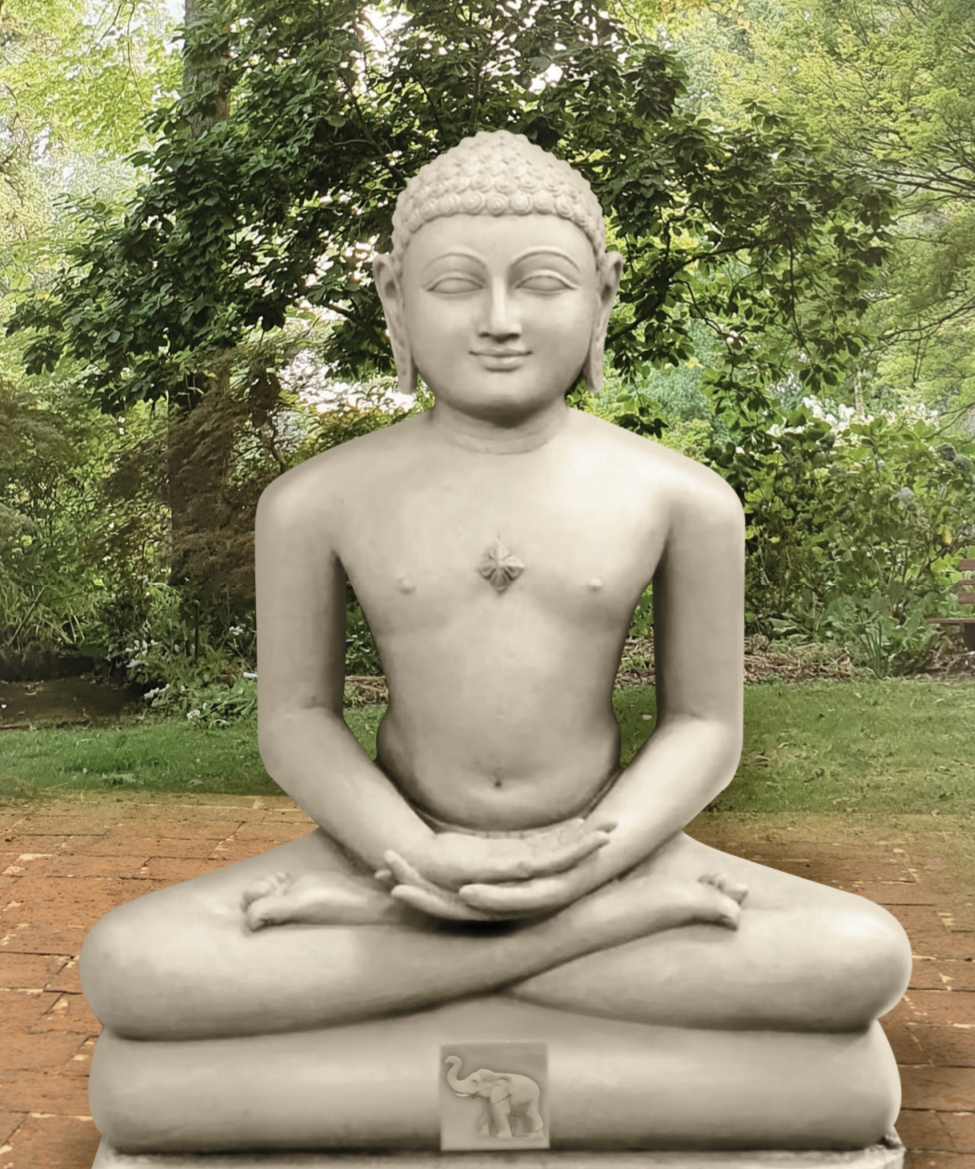
The Second Tirthankara of the Avasarpini — born of royal blood, sworn to inner sovereignty, remembered through every age as The Invincible One.


In the great cosmic half-cycle known as Avasarpini, twenty-four enlightened beings descend to remind humanity of its inmost dignity. After Lord Rishabhanatha — the first Tirthankara — there arose a second light, even more vast in stillness, even more formidable in restraint. He was named Ajitanatha, for none could conquer him: not death, not desire, not delusion.
He was born in the eternal city of Ayodhya, to King Jitashatru — himself a sovereign whose name signals victory — and the radiant Queen Vijaya, whose womb cradled the future Jina. From his first breath, signs auspicious to the cosmos appeared: the celestial beings rejoiced, the earth grew fragrant, and the kingdoms of Bharat felt the silent arrival of an imperishable presence.
Of the noble Ikshvaku dynasty — the same lineage revered through ages of Bharatvarsha — Ajitanatha Bhagwan inherited a throne, an army, and a city. Yet he came to renounce all three, choosing instead the higher kingship of the awakened soul.
“The one whom no enemy could vanquish — neither anger, nor pride, nor any passion of the world — him the seers named Ajita, the Unconquered.”
— Jain Hagiographic TraditionThree threads of identity converge in Ajitanatha Bhagwan — sacred geography, royal lineage, and the very meaning of his luminous name.
The most ancient city of Bharat — birthplace of Tirthankaras and emperors alike — receives him as its second great Jina, after Rishabhanatha.
King Jitashatru and Queen Vijaya — sovereign and serene — are blessed with a son foretold to renounce the worldly throne for an eternal one.
A lineage of righteous monarchs renowned across Jain, Hindu and Buddhist texts — illustrious, dharmic, and woven into the spine of Bharatvarsha.
In Jain philosophy, true invincibility is never measured against enemies outside the self. It is measured against the unseen tyrants within: raga (attachment), dvesha (aversion), moha (delusion), krodha (anger), and maan (pride). To be Ajita is to remain undisturbed by all of them.
Ajitanatha Bhagwan is the embodiment of this victory. Not a warrior who triumphs over kingdoms, but a Jina who triumphs over the karmic afflictions that bind the soul to the cycles of birth. His invincibility is the calm of a deep mountain lake — perfectly still, infinitely clear.
To remember him is to remember that the highest sovereignty is the sovereignty of the awakened self.
Worshipped equally by Shvetambara and Digambara traditions, his image graces consecrated tirthas from Taranga to Itwari, Vanku to Mehsana.
His life is recorded in the Kalpasutra, Trishashtishalakapurusha-charitra, and many devotional hymns sung in temples to this very day.
Devotees the world over invoke his name when seeking the strength to overcome inner adversaries and walk the path of self-mastery.
From royal birth to renunciation, from kevala-jnana to liberation — every chapter unfolds with serene grace.