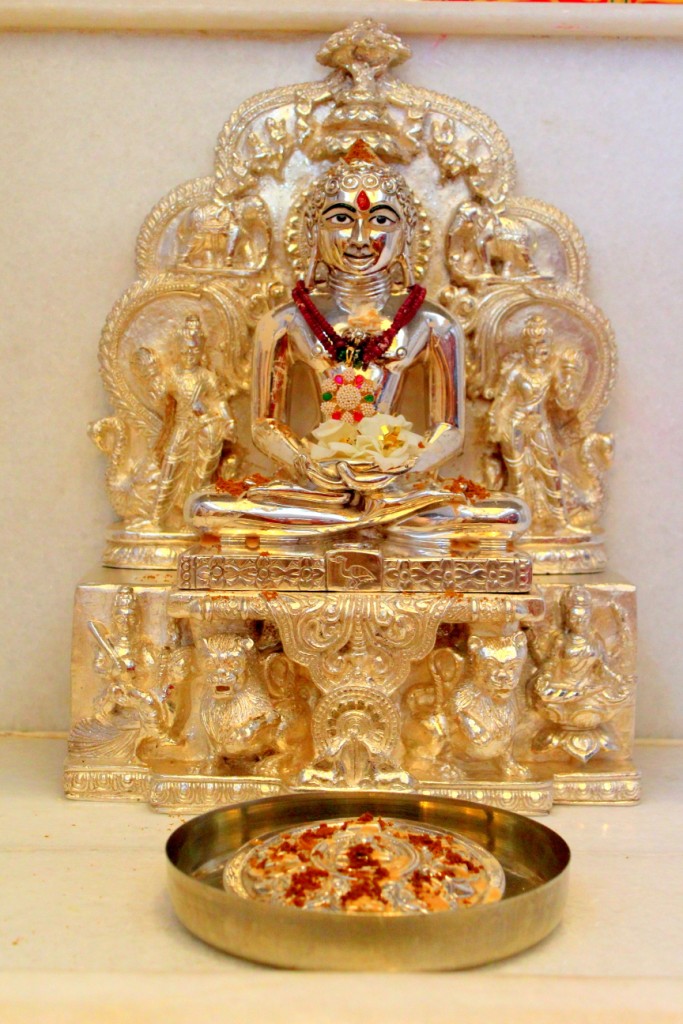
Modern relevance of Sumatinatha Bhagwan’s teachings
Chapter VI

Legacy & Modern Relevance

Ancient wisdom, applied to contemporary life — what the Lord of Right Wisdom has to say to leaders, builders and seekers of our restless century.

A Living Teaching

A philosophy that travels well across centuries.

Sumatinatha Bhagwan’s teaching has always been less about rituals and more about reorientation. Strip away the cultural setting in which it was born, and what remains is a precise, practical operating system for the human being — one that is, if anything, more useful in the digital age than it was in the age of the kingdom.

The questions of his time — how to lead with integrity, how to act without harming, how to remain composed in the face of impermanence — are precisely the questions that surround us today. Only the costumes have changed.

Six Doorways into Modern Life

The Lord’s Wisdom, Today

№ 01 · Leadership

Wisdom in Leadership

To lead is, first, to listen. Sumatinatha’s teaching reminds modern leaders that authority untempered by reflection becomes mere force. Decisions made from a centred mind serve the organisation more durably than decisions made from a reactive one.

The truly powerful leader, in this tradition, is the one who has nothing to prove and therefore nothing to defend.

№ 02 · Decisions

Peaceful Decision-Making

Modern life is lived at the speed of notifications. Sumatinatha’s teaching offers a gentle counter-rhythm — a pause, a breath, a question: “Is this thought clear, or merely loud?” The pause is not a delay; it is the discipline that turns reaction into response.

№ 03 · Simplicity

Simplicity in Modern Life

We are persuaded daily that our worth is measured by what we accumulate. The Lord’s teaching of aparigraha — non-possession in spirit — gently dismantles this fiction. To possess less is not to live less; it is to live more lightly, more clearly, more joyfully.

№ 04 · Ethics

Ethical Success

True success, in this tradition, is never the success of the few at the expense of the many. Satya (truthfulness) and ahimsa (non-harm) are not constraints upon ambition — they are the very conditions of success that does not erode itself over time.

Build well, build fairly, build for many — and the foundation will hold.

№ 05 · Compassion

Compassion in Business & Family

The same eyes that meet a colleague meet a child at home. Sumatinatha’s teaching does not partition life into compartments. The compassion practised in the boardroom, the patience cultivated in negotiation, the listening offered to a customer — all return, deepened, to the dinner table.

№ 06 · Mindfulness

Mindful Living & Clarity

To live mindfully, in the spirit of Sumatinatha, is to be present without performing presence. It is to bring the body and the mind into the same room — a quiet, almost ordinary discipline that, practised long enough, transforms an ordinary life into an awakened one.

A Quiet Practice

Living the Teaching · A Modern Rule of Life

Six small, daily practices distilled from the Lord’s philosophy. Not commandments — invitations.

Morning

Begin with Intent.

Before opening any device, sit for five minutes. Set a single intent for the day: to act, today, without harming. One small intent, kept faithfully, outweighs a hundred grand resolutions.

At Work

Speak only what is true and useful.

Before sending a message or making a remark, ask quietly: is this true, is it kind, is it necessary? When all three meet, the words become medicine.

Decisions

Let the noise pass before you choose.

Decisions made in agitation almost always require unmaking. The teaching is simply: wait the agitation out. The clearer choice will reveal itself, often within the hour.

Conflict

Treat opposition as a teacher in disguise.

The colleague, the client, the family member who challenges you is showing you precisely where your equanimity is shallow. Thank them silently — and do the inner work.

Possessions

Own less, attend more.

Each unnecessary possession is a small claim on your attention. The teaching of aparigraha simply asks that we keep what we use, use what we keep, and release the rest.

Evening

Close with Reflection.

Before sleep, review the day with honesty but without harshness. Where did the teaching live in you today? Where did it not? Begin tomorrow knowing.

Eternity is not somewhere far away — it is whatever remains when the noise inside finally stops. — In the spirit of Sumatinatha

Walk this path with us

For collaborations, devotional projects, and heritage initiatives.